

ED Society Calls for Greater Awareness of Hidden Heat Risks for People Living with Ectodermal Dysplasia
Recent hot weather highlights the challenges faced by people unable to regulate their body temperature effectively.
Following recent temperatures reaching as high as 34°C across parts of the UK, the ED Society are highlighting the challenges that hot weather brings for many people living with Ectodermal Dysplasia. As we move into the summer months, the ED Society is raising awareness of one of the most serious symptoms associated with many forms of Ectodermal Dysplasia: difficulty regulating body temperature.
Ectodermal Dysplasia is a group of rare genetic conditions that affect the development of the teeth, hair, nails, skin and sweat glands. While the condition is often associated with dental and physical differences, one of its most serious and potentially life-threatening symptoms is an inability to regulate body temperature.
Many people affected by Ectodermal Dysplasia have reduced, impaired or completely absent sweat glands. Because sweating is the body’s primary cooling mechanism, hot weather, exercise, illness, warm indoor environments or even everyday activities can cause body temperature to rise rapidly, increasing the risk of heat exhaustion and heatstroke.
While many people look forward to warmer weather, for individuals and families affected by Ectodermal Dysplasia, summer requires careful planning, monitoring and awareness. Something as simple as sitting on a crowded bus, standing in direct sunlight, spending time in a warm classroom, or travelling in a hot car quickly becomes uncomfortable and potentially dangerous.
A Hidden Risk
One of the challenges is that Ectodermal Dyslpasia is often an invisible condition. A child struggling with the heat at school, an adult seeking shade, or someone carrying cooling equipment may not appear to have any underlying medical condition. Greater awareness and understanding makes a huge difference to helping those affected stay safe.
The ED Society has developed extensive temperature control guidance, drawing on decades of lived experience from individuals and families affected by Ectodermal Dysplasia. We are keen to highlight that overheating does not always present in obvious ways, particularly in babies and young children who may be unable to recognise or communicate how they are feeling. This makes careful monitoring and awareness of the warning signs especially important.
Historically, unrecognised overheating has been associated with serious complications in some children affected by Ectodermal Dysplasia, which is why education, awareness and early intervention remain such important parts of managing the condition safely.
Diana Perry, Founder and Chief Executive of the ED Society, explains:
“For many people, a sunny day means trips to the park, outdoor activities and enjoying time with family and friends. For those affected by Ectodermal Dysplasia, it means constant monitoring, careful planning and anxiety.
Due to not being able to sweat properly, they can become dangerously overheated very quickly, even during routine daily activities. What may feel warm for one person can be physically unsafe for someone with Ectodermal Dysplasia. We want people to understand that this condition is real, serious and often hidden. Simple acts of awareness, understanding and support can make a huge difference to someone’s safety and wellbeing.”
Mike Tipton, Professor of Human & Applied Physiology and member of the ED Society’s Medical Advisory Board, adds:
“Although heatwaves represent a threat to many, including those with Ectodermal Dysplasia, and are likely to increase in number, intensity and duration in the future, sensible preparations and precautions, and smart behaviour, can significantly reduce the health risks.”
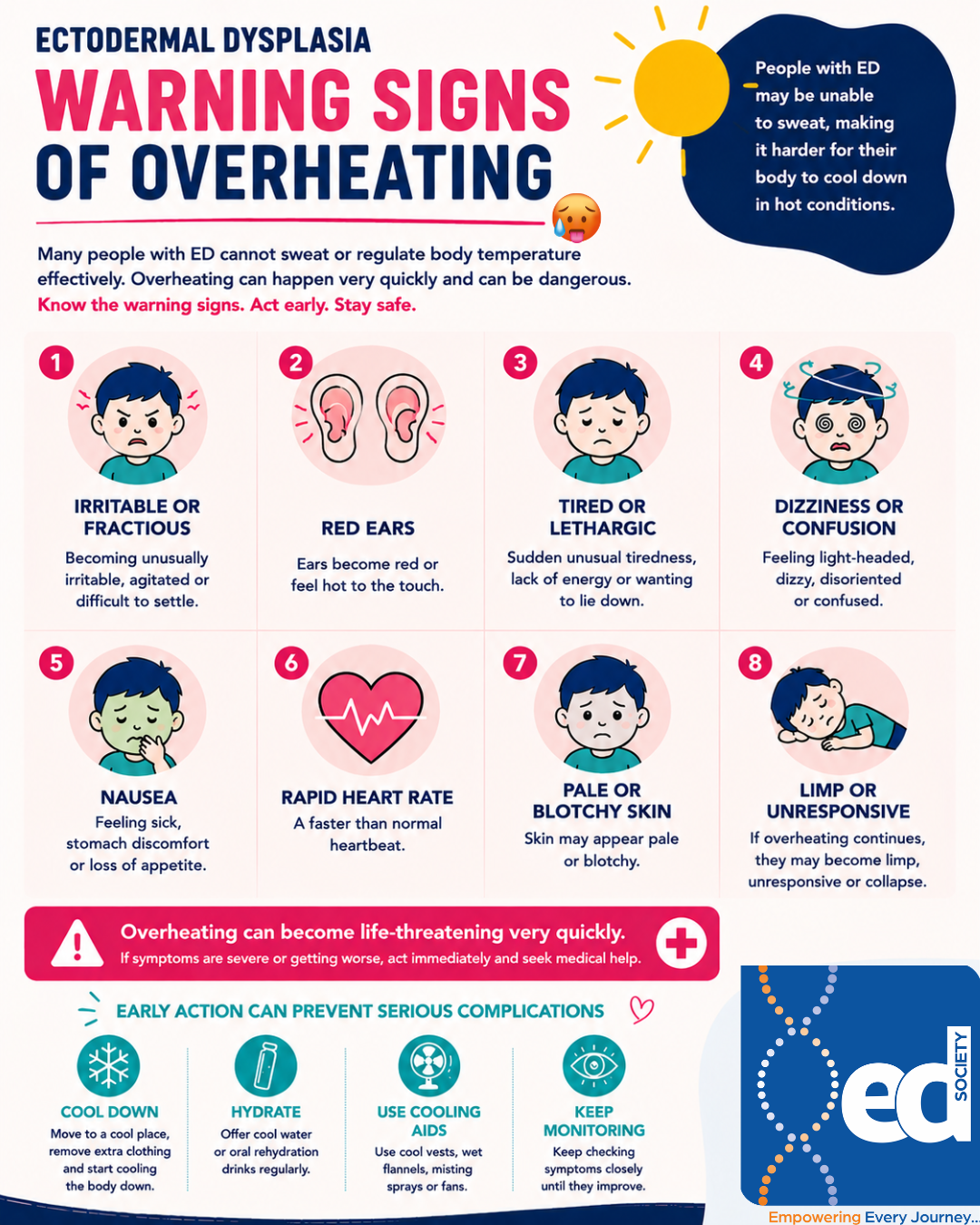
Warning Signs of Overheating
Parents, carers, teachers, employers, friends and family members should be aware of the signs that someone may be struggling to regulate their temperature.
Warning signs can include:
- Red or flushed ears and face
- Dizziness or feeling faint
- Swollen ankles, feet or hands
- Complaints of itchiness or prickling skin
- Slowed speech or movement
- Unusual tiredness or lethargy
- Sudden irritability, grumpiness or behavioural changes
- Reduced concentration or appearing “absent”
- Headache, nausea or confusion
If symptoms do not improve quickly with cooling measures, medical advice should be sought immediately. Suspected heatstroke should always be treated as a medical emergency.
Practical Cooling Tips from the ED Community
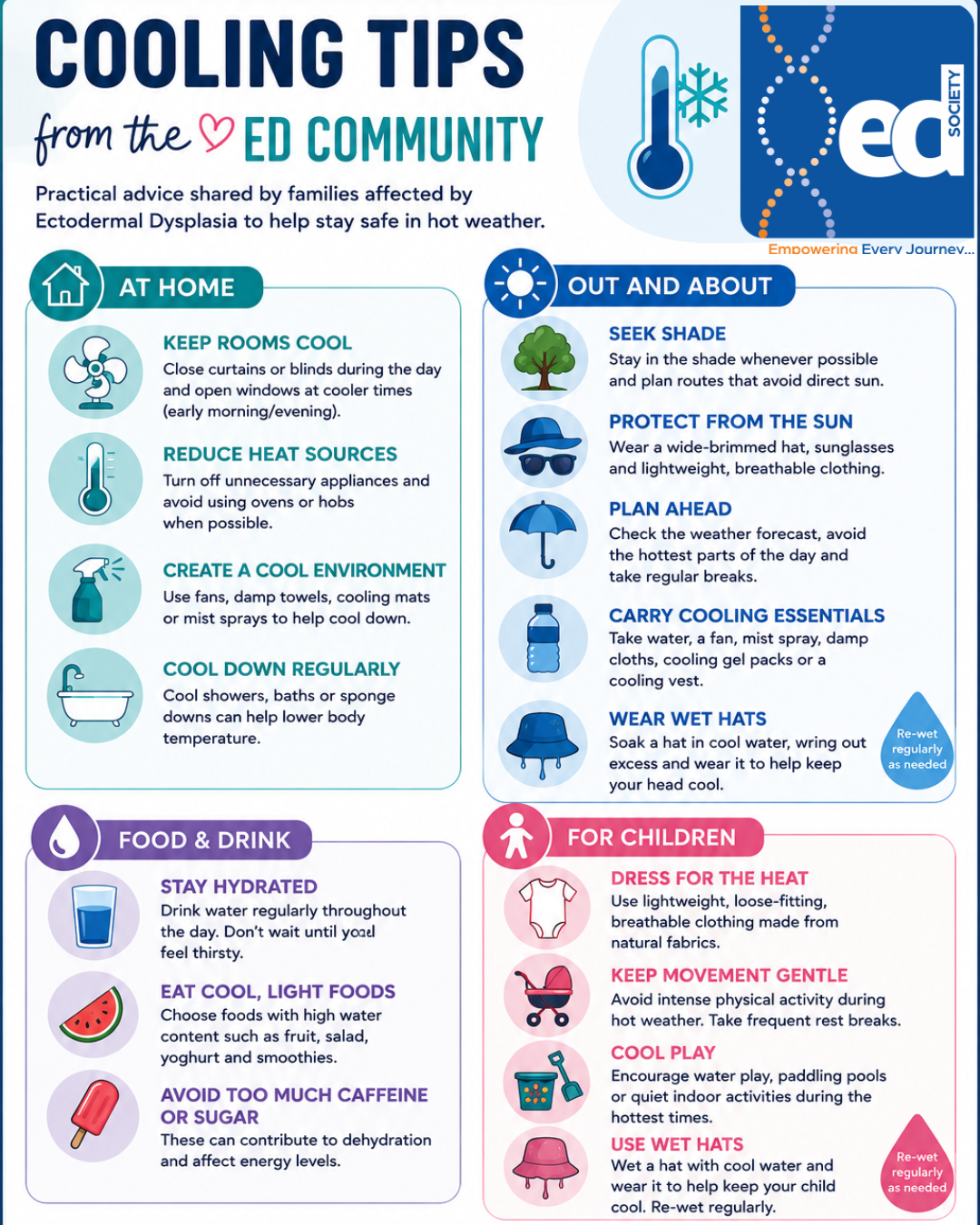
Families affected by Ectodermal Dysplasia become experts in staying cool. The ED Society has compiled practical tips shared by our community that may help anyone stay safe during periods of extreme heat.
At Home
- Use air conditioning units where possible
- Keep curtains, blinds and windows closed during the hottest parts of the day
- Use cooling blankets, cooling mats and cooling pillows throughout the day and night
- Freeze a hot water bottle (in a case) and use it as a cooling aid
- Place feet, ankles, hands and wrists in cool water regularly
- Keep wet towels or flannels around the neck and shoulders
- Sleep in the coolest room available.
When Out and About
- Plan activities for early morning or later in the evening when temperatures are lower
- Seek shade wherever possible
- Wear wet sun hats, cooling towels and lightweight clothing
- Carry cooling fans with spray misters
- Use ice cooling tubes or cooling wraps around the neck and head
- Remove socks and shoes whenever safe and practical to help release heat
- Carry a cooling kit including water, spray bottles, wet flannels and spare cooling accessories.
Food and Drink
- Drink regularly throughout the day
- Enjoy ice lollies, frozen fruit and slushy drinks to help lower body temperature
- Keep cool drinks readily available both at home and when travelling.
For Children
- Allow regular cooling breaks during school, sports and outdoor activities
- Encourage indoor play during peak heat hours
- Ensure schools, and childcare settings have appropriate cooling arrangements and understand the signs of overheating.
Looking Out for Vulnerable People
The ED Society is also encouraging the public to look out for those who may be particularly vulnerable during hot weather, including babies and young children, older adults, those with existing health conditions, and individuals affected by Ectodermal Dysplasia.
A person requesting shade, water, cooling equipment or additional support may have a medical need that is not immediately obvious.
What Does This Look Like in Everyday Life?
The impact of Ectodermal Dysplasia on temperature control is often difficult for others to fully understand.
While many people enjoy warm weather without a second thought, families affected by Ectodermal Dysplasia are constantly assessing risks, planning ahead and adapting daily routines to help keep their loved ones safe.
Below, Amar’s story offers a glimpse into what living with ED during the summer months can really look like.
“We Don’t Walk on the Sunny Side of the Street”…….
Amar is an energetic, football-loving eight-year-old who rarely lets anything stand in his way.
At first glance, you probably wouldn’t know he has a rare genetic condition called Ectodermal Dysplasia (ED).
He has just four teeth in his upper jaw and wears dentures in his lower jaw. His hair is sparse, his skin is affected by eczema, and he produces very little saliva or tears. Most significantly, he is unable to sweat.
For many people, a hot day means heading outdoors to enjoy the sunshine. But for Amar and his family, it means careful planning, constant vigilance and a daily focus on staying cool and avoiding dangerous overheating.
“People often don’t realise that one of the most serious symptoms of Ectodermal Dysplasia is the inability to regulate body temperature,” explains his mum.
“Amar looks like any other little boy running around and having fun, but the effects of overheating can come on very quickly.”
Hot weather presents challenges in situations most people wouldn’t think twice about: public transport, crowded spaces, sitting near a radiator, or even being on the sunny side of the car.
“When he starts getting too hot, one ear will often go bright red and he becomes increasingly fractious. People can think it’s not a big deal because they don’t understand how our bodies typically regulate our body temperature automatically, even when it’s hot. But if the warning signs aren’t recognised, his condition can deteriorate rapidly. On occasions when people caring for him didn’t fully understand his condition, he has become limp from overheating and could no longer walk or talk. We now avoid having babysitters or playdates at other friends’ homes when it’s so hot.”
Like many families affected by ED, staying cool is woven into everyday life.
During the summer, family bike rides happen at six or seven o’clock in the morning so they can enjoy being outdoors before the temperature rises. A visit to the playground with his friends after school is off limits, because after classes is often simply too hot. At school he has a fan and is allowed a spray bottle of water on him at all times, but on some days, when the classroom is particularly hot, attending school safely is not possible.
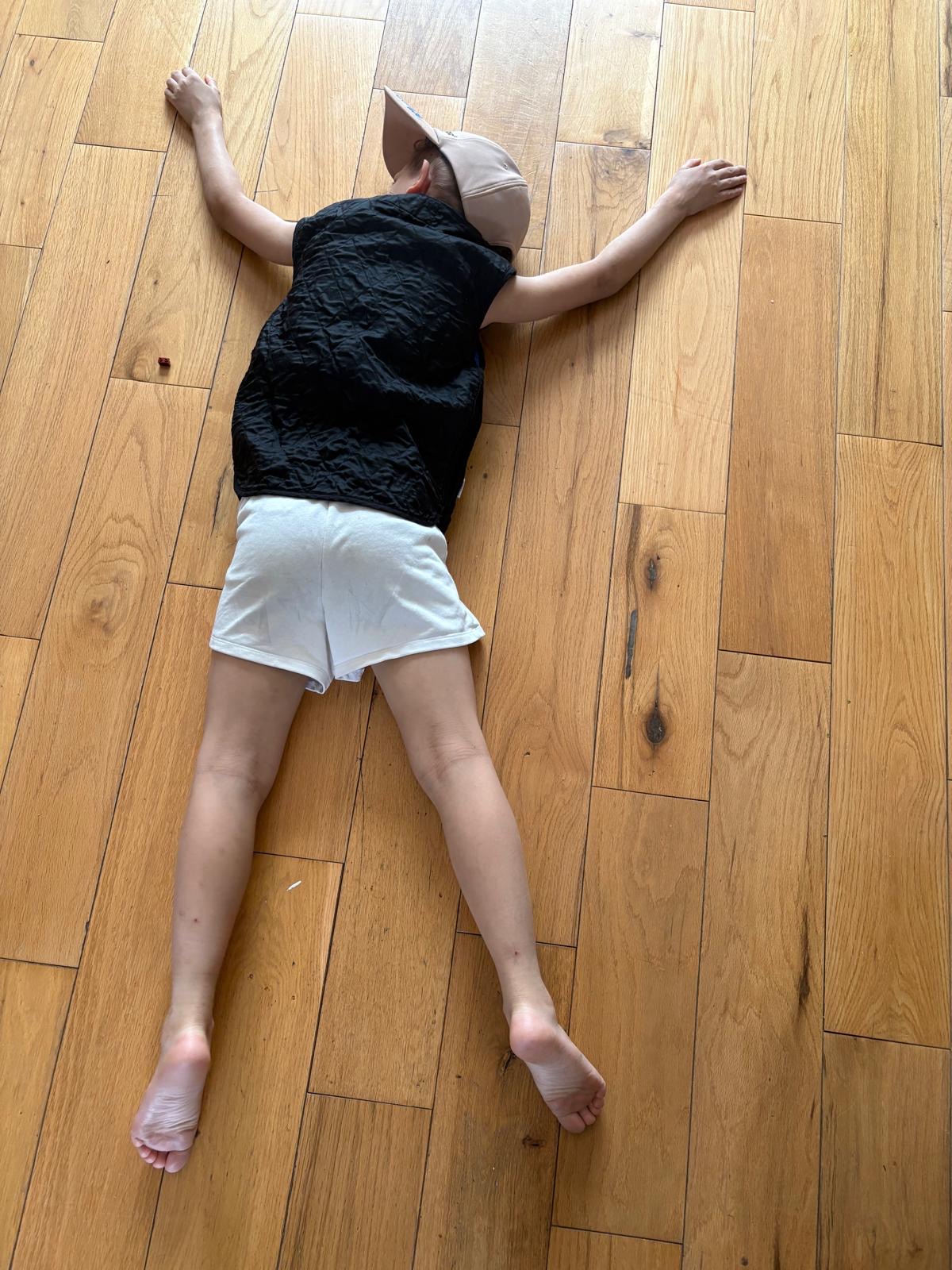
“When he gets home, the first thing he does is lie spread-eagled on the cool wooden floor. The dark downstairs toilet often becomes his summer sanctuary because it’s the coolest room in the house.”
Even a simple walk involves strategy.
“To walk down a street, we play games to spot the shady areas from a tree or building that we can run between. We don’t walk on the sunny side of the street.”
When we asked Amar what it feels like when he gets hot, he said: “It feels like my body is burning up inside me. Especially my feet and hands. I am desperate to feel cool air on me.”
During the summer, Amar wears a special cooling cap and vest. These are soaked in water and due to the many microfibres, the water evaporates slowly which keeps him cool. They were designed for road workers and high performance athletes so they only exist in adult sizes. But Amar has been wearing them since he was four years old – his family sew up the oversized clothes to fit him, as they are a lifeline for him, allowing him to cope more easily on hot days.
“What is tricky is when other people don’t understand. When we’re asking for a space near a window on the bus, we’re not being selfish, it’s because Amar really needs it. Everyone needs to take care in hot weather and we need to look out for each other. Maybe there’s someone standing next to you on the train or in the queue at the supermarket, that really needs your help.”
Additional Resources
- Keeping Cool
- Sweat Function
- Sun Protection
- ED and Core Temperature
- What to do When it is Hot
- Why the Heatwave can be a nightmare for people with this rare disease
Share Your Cooling Tips
Do you have a cooling tip or summer hack that helps you manage ED? We would love to hear from you.
Need Support?
If you or a family member are affected by Ectodermal Dysplasia and would like support, advice or information about managing temperature control difficulties, please get in touch.